Affiliate Disclosure: As an Amazon Associate, we earn from qualifying purchases. This doesn't affect our recommendations or editorial integrity. Learn more

Expert Picks for January 2026

Best Pool Test Kits

Guessing pool chemistry is how you get green water or eye-burning chlorine. We compared test kits from strips to digital, finding what gives accurate readings.

Last updated: January 28, 2026
Share:
Best Overall Our top recommendation
Best Overall
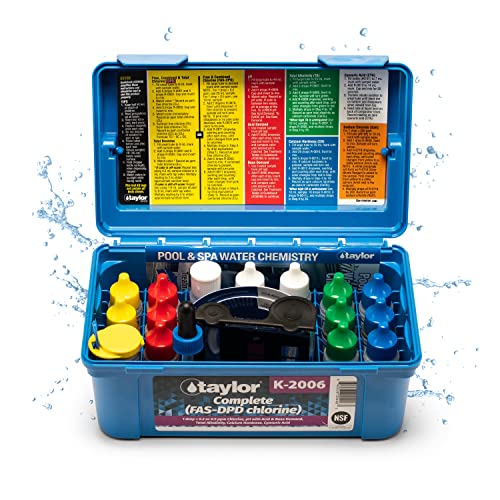
K-2006 Complete Test Kit

Taylor Technologies

K-2006 Complete Test Kit

4.8 (8,765 reviews)

The test kit pool professionals use. The FAS-DPD method gives accurate chlorine readings even at high levels (strips bleach out). If you're serious about pool chemistry, this is the only choice.

Tests

FC, CC, pH, TA, CH, CYA

Type

Drop test/titration

Accuracy

Professional grade

Uses

75+ tests

Pros

  • Professional accuracy
  • FAS-DPD chlorine test
  • Complete chemistry panel

Cons

  • Learning curve
  • More steps than strips
  • Reagent refills needed

Head-to-Head Comparison

ProductRatingPrice Action
K-2006 Complete Test Kit
K-2006 Complete Test Kit Best
Taylor Technologies
4.8
$89 View
7-Way Test Strips - 100 Count
7-Way Test Strips - 100 Count Value
AquaChek
4.4
$24 View
ColorQ Pro 11 Digital Tester
LaMotte
4.6
$329 View
5-Way Test Kit with Case
Poolmaster
4.2
$12 View
Smart Pool Water Monitor
Sutro
4.3
$399 View

* Prices may vary. As an Amazon Associate, we earn from qualifying purchases.

All Recommended Products

Best Overall
K-2006 Complete Test Kit

Taylor Technologies

K-2006 Complete Test Kit

4.8 (8,765 reviews)

The test kit pool professionals use. The FAS-DPD method gives accurate chlorine readings even at high levels (strips bleach out). If you're serious about pool chemistry, this is the only choice.

Tests

FC, CC, pH, TA, CH, CYA

Type

Drop test/titration

Accuracy

Professional grade

Uses

75+ tests

Pros

  • Professional accuracy
  • FAS-DPD chlorine test
  • Complete chemistry panel

Cons

  • Learning curve
  • More steps than strips
  • Reagent refills needed
Best Value
7-Way Test Strips - 100 Count

AquaChek

7-Way Test Strips - 100 Count

4.4 (23,456 reviews)

Dip, wait, compare. Test strips are the fast food of pool testing—quick, convenient, good enough for routine checks. Keep a bottle by the pool for daily dips. Upgrade to liquid testing for problem-solving.

Tests

FC, TC, pH, TA, CH, CYA, Bromine

Type

Test strips

Quantity

100

Time

15 seconds

Pros

  • Dip and read simplicity
  • 7 parameters at once
  • 100 tests per bottle

Cons

  • Less accurate than liquid
  • Bleach out at high chlorine
  • Color matching subjective
Premium Pick
ColorQ Pro 11 Digital Tester

LaMotte

ColorQ Pro 11 Digital Tester

4.6 (2,345 reviews)

Digital precision for pool perfectionists. The photometer eliminates color-matching guesswork—it reads the exact concentration. If you've ever debated whether that's light pink or salmon, this is your upgrade.

Tests

11 parameters

Type

Digital photometer

Accuracy

Lab grade

Power

Rechargeable

Pros

  • Digital readout—no color matching
  • 11 test parameters
  • Lab-accurate results

Cons

  • Expensive
  • Reagent tablets needed
  • Overkill for most pools
Budget Pick
5-Way Test Kit with Case

Poolmaster

5-Way Test Kit with Case

4.2 (12,345 reviews)

Basic drop testing for under $15. Not as precise as Taylor, not as complete, but real liquid testing beats strips for accuracy. A solid starter kit until you're ready to upgrade.

Tests

FC, pH, TA, CH, Bromine

Type

Drop test

Reagents

OTO/phenol red

Case

Included

Pros

  • Under $15
  • Drop test accuracy
  • Basic chemistry covered

Cons

  • Limited parameters
  • OTO chlorine test (less precise)
  • Small reagent bottles
Smart Pool Water Monitor

Sutro

Smart Pool Water Monitor

4.3 (3,456 reviews)

Your pool tests itself. Sutro floats in your pool, tests three times daily, and sends results to your phone with dosing recommendations. For the pool owner who wants data without the dipping.

Tests

pH, FC, TA

Type

Digital monitor

Connection

WiFi

Power

Solar + battery

Pros

  • Continuous monitoring
  • App notifications
  • Chemical recommendations

Cons

  • High cost
  • Subscription for full features
  • Cartridge replacement needed

Buying Guide: How to Choose Pool Test Kits


How to Choose a Pool Test Kit

Testing your pool isn't optional—it's how you prevent problems before they become expensive. The right test kit depends on how deep into pool chemistry you want to go. Start simple, upgrade as needed.

Testing Methods

Test Strips
Dip, wait, compare colors. Fast and convenient but less precise. Colors can be hard to match, and high chlorine "bleaches out" giving false low readings. Good for quick daily checks.

Liquid Drop Test (OTO)
Add drops, compare color. More accurate than strips. Standard with basic kits. The yellow OTO chlorine test shows total chlorine but can't distinguish free from combined.

Liquid Titration (FAS-DPD)
Add drops until color change, count drops. The professional standard. Accurately measures free chlorine at any level. Taylor K-2006 uses this method. Worth learning if you're serious.

Digital Photometer
Add reagent, insert sample, read digital display. Eliminates color-matching subjectivity. Expensive but precise. Overkill for routine testing, valuable for troubleshooting.

### Parameters That Matter

Free Chlorine (FC): The sanitizer actually working. Target: 1-3 ppm.

Combined Chlorine (CC): Chlorine bound to contaminants. Should be under 0.5 ppm. (CC = Total Chlorine
  • Free Chlorine)

    pH: Affects chlorine effectiveness and comfort. Target: 7.2-7.6.

    Total Alkalinity (TA): Buffers pH stability. Target: 80-120 ppm.

    Cyanuric Acid (CYA): Stabilizer protecting chlorine from UV. Target: 30-50 ppm (higher for saltwater pools).

    Calcium Hardness (CH): Prevents surface damage. Target: 200-400 ppm (lower for vinyl).

    ### Testing Frequency

    Daily or every-other-day during swim season: FC and pH (strips are fine)

    Weekly: Full panel including TA, CH, CYA (liquid testing preferred)

    Problem-solving: Use accurate liquid testing, not strips
  • Frequently Asked Questions About Pool Test Kits

    Why don't my test strips match the liquid test results?

    Strips are less precise—color matching is subjective, and strips can bleach out at high chlorine levels. Liquid drop tests use chemical reactions with clearer endpoints. For accurate readings, trust liquid tests. Use strips for quick daily monitoring, liquid tests for decisions.

    How often should I test my pool water?

    At minimum: daily chlorine/pH checks during swim season (strips work), weekly full panel (liquid test). More frequent testing after heavy use, rain, or chemical additions. During off-season: weekly is sufficient. Consistent testing prevents surprises.

    Do I really need to test CYA?

    Yes, if you use stabilized chlorine (trichlor tablets). CYA accumulates over time since it doesn't dissipate. High CYA (>80 ppm) reduces chlorine effectiveness—you need more chlorine to achieve the same sanitation. Draining and refilling is the only way to lower CYA.

    What's the best test kit for beginners?

    Start with AquaChek 7-way strips for daily convenience. Add a basic liquid kit (like Poolmaster 5-way) for weekly verification. Once you understand chemistry relationships, upgrade to Taylor K-2006 for professional accuracy. Progress with your knowledge.

    Was this guide helpful?

    Why Trust Our Recommendations?

    We analyze thousands of real customer reviews, compare product specifications, and curate recommendations so you can make an informed decision without the research hassle.

    Curated Recommendations
    Real Customer Reviews
    Specs Compared
    No Paid Placements